Strengthening WordPress Container Security: Unmasking Cross-Container & Virtualization Risks in WordPress Plugins (2026)
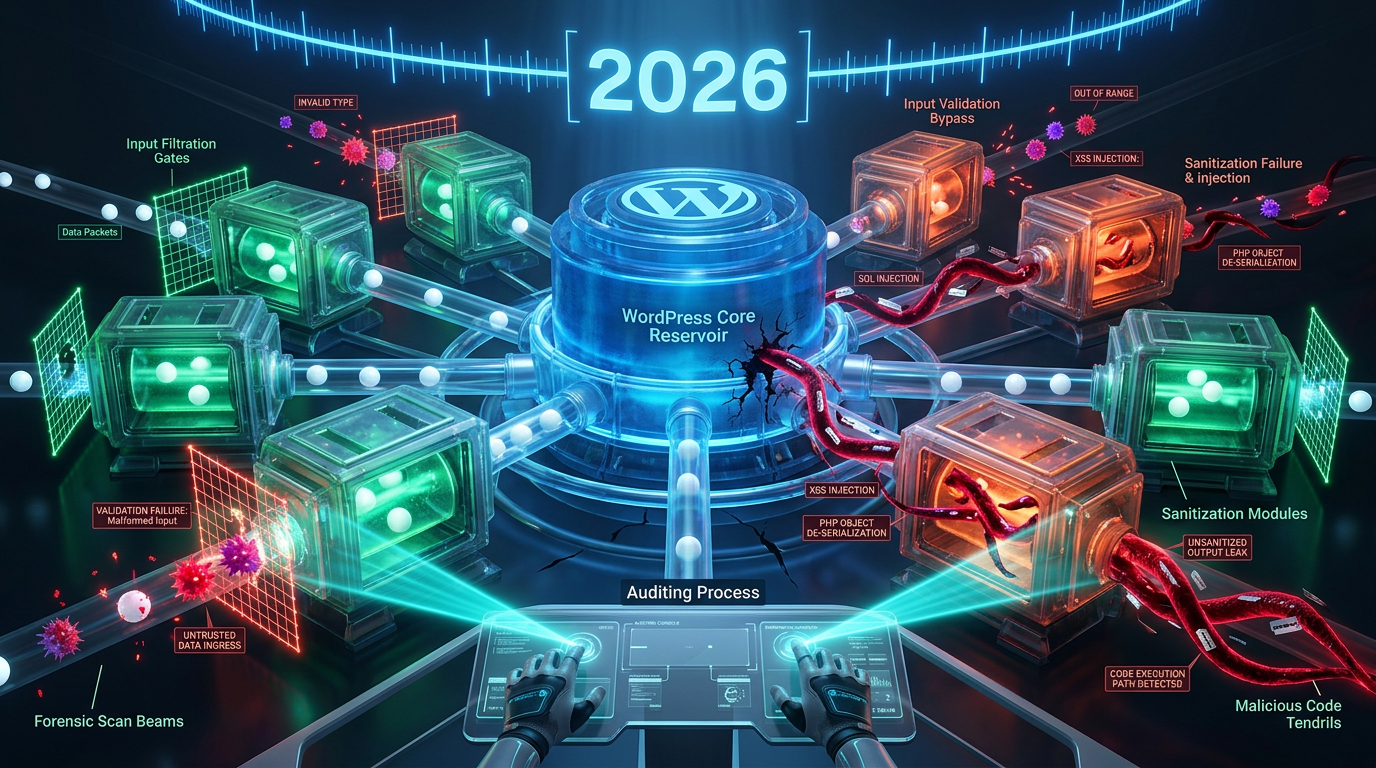
In the evolving landscape of web development, WordPress container security has become a paramount concern for site administrators and developers alike. As we navigate 2026, the adoption of containerization and virtualization technologies for WordPress deployments is accelerating due to their promise of scalability, efficiency, and isolation. However, this architectural shift introduces a new spectrum of challenges, particularly concerning the interactions between WordPress plugins and their operating environments. Understanding and mitigating cross-container and virtualization risks is crucial for maintaining a secure and high-performing WordPress ecosystem. For more context on plugin-related risks, consider exploring articles like "The Silent Custodians: How WordPress Plugins Are Redefining Data Security and Privacy in 2026."
The Rise of Containerization and Its Impact on WordPress Container Security
Containerization, primarily driven by technologies like Docker and Kubernetes, has revolutionized how applications are deployed and managed. For WordPress, this means running the core application, database, and often individual plugins or microservices within isolated containers. This isolation is a double-edged sword; while it can prevent direct interference between applications, vulnerabilities within one container or poor configuration can still ripple through the entire system.
The appeal of containers for WordPress stems from:
- Portability: Easily move entire WordPress environments between different hosts.
- Scalability: Spin up new instances quickly to handle traffic spikes.
- Resource Efficiency: Optimized resource utilization compared to traditional virtual machines.
Despite these benefits, the inherent complexities of managing containerized environments, especially concerning the dynamic nature of WordPress plugins, often lead to overlooked security gaps. These gaps are precisely where dedicated WordPress container security strategies become indispensable. You can further explore how plugins manage underlying systems in "The Silent Cartographers: Deconstructing WordPress Plugins' Hidden Influence on DNS & Network Configuration in 2026."
Understanding the Shared Kernel Dilemma
A fundamental aspect of containerization is its reliance on a shared host operating system kernel. Unlike traditional virtualization, where each virtual machine has its own kernel, containers share the host's kernel. This shared resource introduces a critical attack surface. If a vulnerability exists within the kernel itself, a malicious actor could potentially exploit it from within one container to impact others or even gain control of the host system. This scenario highlights the importance of keeping host systems patched and secure, directly influencing overall WordPress container security.
Furthermore, misconfigurations in container runtime or orchestration tools can inadvertently expose host resources or allow containers to break out of their intended isolation boundaries. Regular security audits of the container infrastructure are a non-negotiable practice in 2026. For insights into runtime risks, see "The Silent Compilers: Unmasking Just-In-Time Compilation & Runtime Code Generation Risks in WordPress Plugins (2026)."
Cross-Container Vulnerabilities and WordPress Plugins
WordPress plugins, while extending functionality, are often sources of security vulnerabilities. In a containerized setup, these vulnerabilities can be amplified, creating new attack vectors that traditional security models might miss. Cross-container vulnerabilities arise when a flaw in one container allows an attacker to compromise another container or the underlying host.
Consider the following scenarios:
- An outdated plugin in one WordPress container has a known remote code execution (RCE) vulnerability. An attacker exploits this, gains control of that container, and then leverages misconfigured network policies or shared volumes to access data in another WordPress container.
- A plugin with excessive permissions in a container allows an attacker to execute commands that interact with the container runtime daemon, potentially launching new malicious containers or altering existing ones.
- Supply chain attacks impacting third-party libraries used by a WordPress plugin could introduce backdoors that, in a containerized environment, might be used to orchestrate cross-container attacks or establish persistence on the host.
Effective WordPress container security demands a holistic view, extending beyond individual applications to encompass the entire orchestration layer and the dependencies within each container. This is particularly relevant when considering the supply chain integrity discussed in "The Silent Orchestrators: How WordPress Plugins Dictate Third-Party Dependency Loading & Supply Chain Integrity in 2026."
Insecure Inter-Container Communication
Containers often need to communicate with each other – think of a WordPress front-end container talking to a database container. If this communication is not properly secured, it becomes a weak point. Unencrypted traffic, weak authentication mechanisms, or overly permissive network policies can allow an attacker who has compromised one container to eavesdrop on, or even inject malicious data into, communications with other containers. Implementing strong network segmentation, mutual TLS (mTLS) for inter-container communication, and strict ingress/egress rules are vital for bolstering WordPress container security. Further details on how plugins manage network flows can be found in "The Silent Conductors: How WordPress Plugins Dictate Network Traffic & Data Egress in 2026."
Shared Volumes and Data Exposure
Persistent storage for WordPress often involves mounting host volumes into containers. If not managed carefully, these shared volumes can introduce significant risks. A vulnerability in one container that allows arbitrary file writes could be exploited to modify files on a shared volume, potentially impacting other containers that also use that volume, or even the host system. Ensuring principle of least privilege for volume access and scrutinizing plugin interactions with the file system are key practices.
Virtualization Risks and Mitigation Strategies for WordPress
While often used interchangeably, virtualization (VMs) and containerization have distinct security implications. WordPress instances running on traditional virtual machines offer a stronger isolation boundary because each VM has its own operating system kernel. However, they are not immune to risks. Hypervisor vulnerabilities, though rare, can be catastrophic, allowing an attacker to break out of one VM and access others or the host.
For WordPress deployments on VMs, a focus on the following is essential for robust security:
- Hypervisor Patching: Regularly update the hypervisor software to protect against known vulnerabilities.
- VM Hardening: Apply security best practices to each WordPress VM, including limiting network access, disabling unnecessary services, and using strong firewall rules.
- Network Segmentation: Isolate WordPress VMs into distinct network segments to limit lateral movement in case of a breach.
In 2026, the boundaries between VMs and containers can blur in hybrid environments. A WordPress setup might involve containers running within VMs, further complicating the security posture. A clear understanding of the security model at each layer is critical for comprehensive WordPress container security. For more information on securing virtual environments, the Cloud Native Computing Foundation (CNCF) Security Whitepaper offers valuable resources.
Plugin Evaluation in Containerized & Virtualized Environments
The fundamental principles of secure plugin usage remain, but their application within containerized and virtualized setups requires extra diligence. Before integrating any plugin, administrators must:
- Assess Plugin Permissions: Understand what system resources a plugin requests access to. Does it truly need access to arbitrary file paths or network sockets? Especially in a container, excessive permissions can accelerate cross-container attacks.
- Scrutinize Third-Party Dependencies: Many plugins rely on external libraries. Scan these dependencies for known vulnerabilities (CVEs) and ensure they are kept up-to-date. In container images, outdated dependencies are a common source of compromise.
- Monitor Network Activity: Use network monitoring tools to observe plugin outbound connections. Malicious plugins might attempt to communicate with command-and-control servers, a clear indicator of compromise that needs monitoring in a containerized network.
These evaluations become part of a broader strategy for effective WordPress container security. The OWASP Top 10 provides a good starting point for common web application vulnerabilities that can manifest in plugins.
Best Practices for Enhancing WordPress Container Security (2026)
Achieving robust WordPress container security in 2026 requires a multi-layered approach that encompasses infrastructure, deployment practices, and continuous monitoring. Simply containerizing WordPress is not a security panacea; it introduces new complexities that demand specialized attention.
Here are crucial best practices:
- Principle of Least Privilege: Grant containers and plugins only the minimum necessary permissions. Restrict file system access, network capabilities, and host interactions to what is strictly required for functionality.
- Immutable Infrastructure: Treat container images as immutable. Never make changes directly inside a running container. Instead, if updates or changes are needed, build new images with the updated components and deploy them. This prevents configuration drift and makes rollbacks easier.
- Regular Image Scanning: Implement continuous vulnerability scanning for all container images. Tools designed for container security can identify known vulnerabilities in operating system packages, libraries, and application dependencies before deployment.
- Network Segmentation and Microsegmentation: Isolate containers from each other and from the host network as much as possible. Use network policies to define strict communication rules between containers and external services.
- Container Runtime Security: Employ container runtime security solutions that monitor container behavior, detect anomalous activities, and can enforce policies in real-time to prevent container escapes or unauthorized actions.
- Secure Secrets Management: Never hardcode sensitive information (database credentials, API keys) directly into container images or configuration files. Use dedicated secret management solutions (e.g., Kubernetes Secrets, HashiCorp Vault) and ensure access to these secrets is tightly controlled.
- Host System Hardening: The security of the host operating system running the containers is paramount. Keep it patched, minimize installed software, and configure it securely to reduce the attack surface.
- Logging and Monitoring: Implement comprehensive logging across all layers – host, container runtime, containerized applications, and orchestration plane. Centralize logs and use monitoring tools to detect security incidents promptly.
- Automated Security Testing: Integrate security testing (SAST, DAST, dependency scanning) into your CI/CD pipelines for WordPress development and plugin integration.
- Regular Security Audits: Conduct periodic security audits of your entire containerized WordPress environment, including configurations of orchestration tools, network policies, and container images.
By diligently applying these practices, organizations can significantly bolster their WordPress container security posture and safeguard against the sophisticated threats prevalent in 2026. For a deeper dive into modern security auditing, consider "Quantum Leap in Auditing: Unmasking Temporal Side-Channel Attacks in WordPress Plugins (2026)."
Frequently Asked Questions

Written by Aras Akıncılar
Uzun yıllara dayanan WordPress deneyimine sahip bir siber güvenlik uzmanı olarak, eklenti ekosisteminin derinlemesine analizine odaklanıyorum. Güvenlik açıkları, performans düşüşleri ve uyumluluk sorunları üzerine hazırladığım makalelerle, WordPress kullanıcılarının sitelerini daha güvenli ve verimli hale getirmelerine yardımcı olmayı hedefliyorum.