The Silent Curators: How WordPress Plugins Dictate Data Lineage & Provenance in 2026
In the evolving digital landscape of 2026, understanding WordPress data lineage has become more critical than ever, especially given the pervasive use of WordPress plugins that remodel user interaction. Every piece of data on a WordPress site – from a simple blog post to complex e-commerce transactions – has a story of its origin, mutations, and ultimate destination. This journey is its data lineage, and surprisingly, the myriad of WordPress plugins installed on a site often silently dictates much of this narrative. This article delves into how plugins influence data provenance, the associated risks, and best practices for maintaining a transparent and secure data flow.
For more insights into the broader impact of plugins, consider exploring how WordPress plugins metabolize server configurations, which offers another perspective on their silent influence.
Understanding WordPress Data Lineage in the Plugin Ecosystem
WordPress data lineage refers to the complete lifecycle of data within a WordPress environment. It encompasses where the data originated, how it was stored, modified, and used, and where it eventually ended up. In a system as modular as WordPress, plugins aren't just adding features; they are actively participating in and often altering this data journey.
Each plugin, whether it's for SEO, e-commerce, contact forms, or security, interacts with the WordPress database and file system in unique ways. This interaction creates a complex web of data relationships that can be challenging to map without proper understanding and oversight. As organizations become more data-driven, tracing the lineage of critical information becomes paramount for compliance, auditing, and decision-making.
What Constitutes Data Lineage in WordPress?
- Data Source: Identifying where the data first entered the system (e.g., user registration form, API integration, content import).
- Transformation: Documenting any changes or processing applied to the data by plugins (e.g., SEO plugin optimizing meta descriptions, e-commerce plugin updating order statuses).
- Storage Locations: Knowing where the data resides (e.g.,
wp_poststable, custom plugin tables, external services). - Data Flow: Tracing the movement of data between different tables, plugins, and external systems.
- Access and Usage: Understanding which plugins or users access and utilize specific data points.
Effectively managing WordPress data lineage ensures transparency and accountability for all digital assets, a topic further explored in articles concerning digital content provenance and integrity in WordPress plugins.
The Impact of Plugins on WordPress Data Lineage and Provenance
Plugins are the lifeblood of many WordPress sites, extending functionality far beyond its core capabilities. However, this extensibility comes with a direct influence on data flow and provenance. A plugin might introduce new database tables, modify existing ones, or even export data to third-party services. Each of these actions contributes to, and often complicates, the understanding of WordPress data lineage.
Data Creation and Modification by Plugins
Consider a simple contact form plugin. It collects user submissions (new data), stores them in its own database table or the wp_posts table as a custom post type, and might even send an email notification (another data transaction). An e-commerce plugin like WooCommerce creates extensive data related to products, orders, customers, and transactions. Each step is a point in the data's lineage.
Similarly, an SEO plugin might modify post meta-data, a caching plugin might create temporary data storage, and a membership plugin could link user data to specific access levels. These modifications are crucial for the site's operation but can obscure the original state or source if not carefully tracked.
Third-Party Integrations and External Data Flow
Many plugins function as bridges to external services. An email marketing plugin sends subscriber data to Mailchimp or ConvertKit. An analytics plugin transmits visitor behavior to Google Analytics. A payment gateway plugin securely exchanges transaction details with banking institutions. These integrations extend the WordPress data lineage beyond the immediate site environment, introducing new considerations for data sovereignty, privacy, and compliance.
Understanding these external data flows is paramount. As of 2026, with stringent data protection regulations in place globally, an unmanaged data egress point introduced by a plugin can lead to significant compliance issues. This is also why WordPress plugins as data sovereignty agents demand careful consideration.
Potential Risks and Threats to Data Provenance from Plugins
While plugins offer immense utility, they also introduce a unique set of risks that can compromise the integrity and clarity of WordPress data lineage. Ignoring these risks can lead to security vulnerabilities, performance degradation, and difficulty in auditing data.
Outdated Code and Security Vulnerabilities
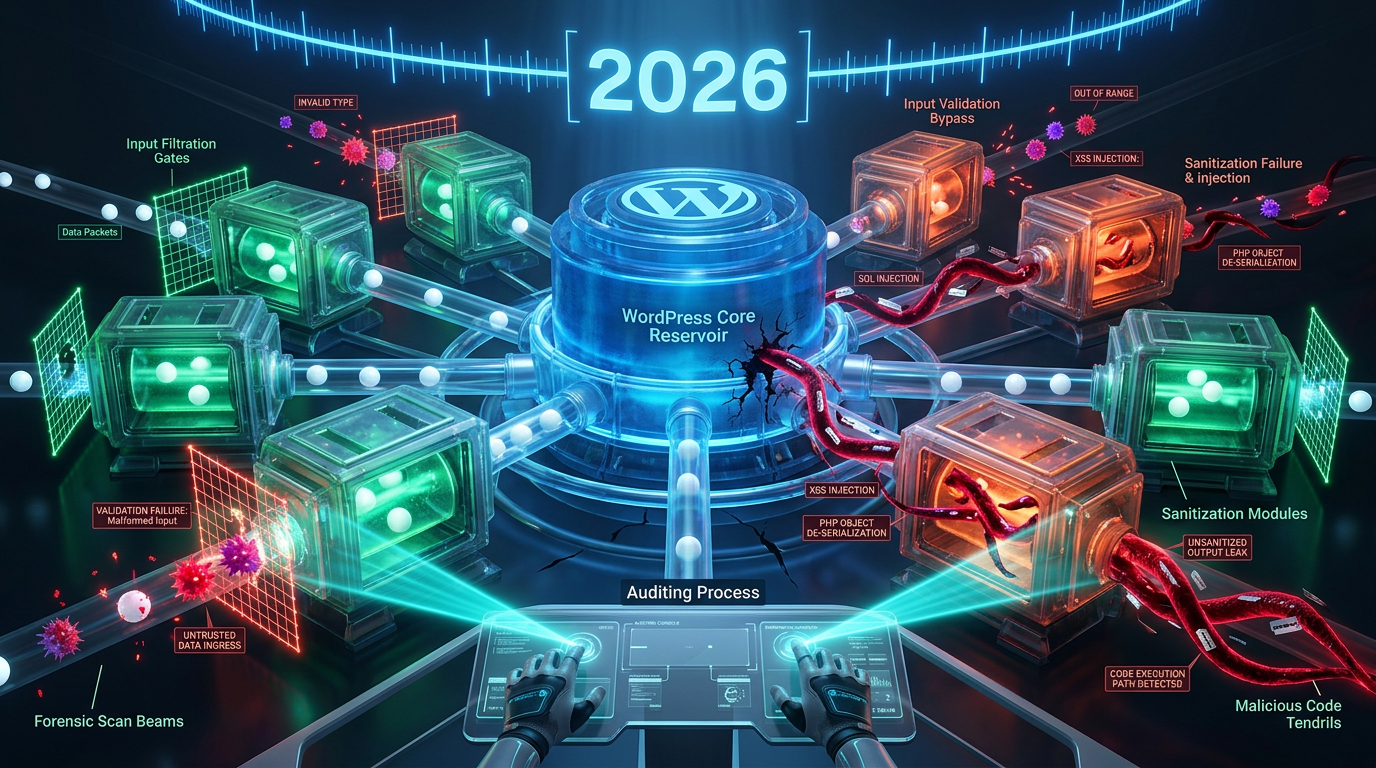
One of the most significant risks stems from outdated plugin code. Developers constantly release updates to patch security flaws, improve performance, and ensure compatibility. However, if a website owner neglects to update plugins, open vulnerabilities can be exploited. An attacker gaining access through an outdated plugin can tamper with data, inject malicious code, or exfiltrate sensitive information, fundamentally altering or corrupting the data's lineage without authorization.
Furthermore, poorly coded plugins might have inherent security flaws, such as SQL injection vulnerabilities or cross-site scripting (XSS), allowing malicious actors to manipulate database entries or steal user credentials. This directly impacts the trustworthiness of the data's provenance, a concern relevant to understanding the rise of adversarial AI in WordPress plugins.
Excessive Permissions and Data Access
Many plugins request broad permissions to function correctly. While some are legitimate, others might ask for access beyond what's necessary. A plugin with excessive permissions could, intentionally or unintentionally, access, modify, or delete sensitive data not directly related to its core function. This "over-privileging" makes it challenging to trace who or what modified data, as multiple plugins might have the technical capability, even if only one was intended to. Always review requested permissions during plugin installation.
Compatibility Problems and Data Corruption
The WordPress ecosystem is dynamic. A new core update or another plugin update can cause compatibility issues with an existing plugin. Such conflicts can lead to unexpected behavior, including data corruption, partial data loss, or inconsistent data storage. When data is corrupted due to compatibility problems, accurately tracing its original state or the point of corruption becomes a complex task, muddying the WordPress data lineage.
For instance, two plugins trying to write to the same metadata field in different formats could lead to data being overwritten or incorrectly interpreted.
Best Practices for Managing WordPress Data Lineage with Plugins
Maintaining a clear and verifiable WordPress data lineage in a plugin-rich environment requires proactive management and adherence to best practices. Ignoring this can lead to data integrity issues, compliance headaches, and security breaches.
Regular Plugin Audits and Updates
Performing regular audits of installed plugins is crucial. This involves assessing each plugin's necessity, checking its reputation, and verifying its last update date. Prioritize plugins that are actively maintained and have a strong track record. Immediately update plugins upon release of security patches or bug fixes. Automate updates where appropriate, but always test on a staging environment first to prevent compatibility issues from affecting live data.
- Review plugin reviews and support forums before installation.
- Uninstall unused or abandoned plugins to reduce attack surface and clutter.
- Keep a record of all installed plugins and their versions.
Implement Strong Security Measures
Beyond plugin-specific updates, a holistic security approach is vital. This includes using strong, unique passwords, implementing two-factor authentication for all users, and employing a robust security plugin that offers firewall protection and malware scanning. Regular backups are non-negotiable, providing a safety net in case of data corruption or loss, and offering a historical snapshot of your WordPress data lineage.
Consider using a WordPress security plugin that can monitor file changes and database integrity, alerting you to unauthorized modifications that could indicate a compromised data lineage. This aligns with approaches for WordPress data security best practices.
Logging and Monitoring Data Interactions
To accurately track WordPress data lineage, robust logging and monitoring are essential. Install plugins that log user actions, plugin changes, and database modifications. This provides an audit trail that can be invaluable for forensic analysis in case of a data breach or corruption. Database monitoring tools can help identify which plugins are interacting with specific tables and how.
- Utilize activity log plugins to record all significant events.
- Monitor database queries for unusual patterns or access.
- Regularly review logs for suspicious activities impacting data.
Choose Reputable and Well-Maintained Plugins
The choice of plugins significantly impacts your data's journey. Opt for plugins from reputable developers with a history of regular updates, good support, and positive community feedback. Avoid plugins from unknown sources, as they are more likely to contain vulnerabilities or introduce unwanted data behaviors. A well-coded plugin respects data standards and integrates smoothly without introducing unnecessary complexities to the WordPress data lineage.
Before installing, check:
- The number of active installations, often found on the official WordPress plugin directory.
- The plugin's rating and reviews.
- When it was last updated.
- Compatibility with your current WordPress version.
The Future of WordPress Data Lineage Tools in 2026
As WordPress continues to power a significant portion of the web, and data regulations become more stringent, the demand for sophisticated tools to manage WordPress data lineage is growing. We anticipate a rise in specialized plugins and services designed specifically for data governance, auditing, and compliance within the WordPress ecosystem.
These future tools will likely offer:
- Automated Data Mapping: Automatically discover and map data flows between plugins, core, and external services.
- Granular Data Access Control: More refined control over which plugins can access or modify specific types of data.
- Real-time Lineage Monitoring: Instantly detect and alert on unauthorized data modifications or suspicious data movements.
- Compliance Reporting Features: Generate reports suitable for GDPR, CCPA, and other data privacy regulations, detailing data provenance and usage.
By embracing these advancements, WordPress site owners can gain unparalleled visibility and control over their data, ensuring integrity and trust in the digital age of 2026. Understanding and managing WordPress data lineage is no longer optional; it's a fundamental requirement for a secure and compliant online presence.
Frequently Asked Questions

Written by Aras Akıncılar
Uzun yıllara dayanan WordPress deneyimine sahip bir siber güvenlik uzmanı olarak, eklenti ekosisteminin derinlemesine analizine odaklanıyorum. Güvenlik açıkları, performans düşüşleri ve uyumluluk sorunları üzerine hazırladığım makalelerle, WordPress kullanıcılarının sitelerini daha güvenli ve verimli hale getirmelerine yardımcı olmayı hedefliyorum.