WordPress Edge AI Plugins: The Silent Storytellers Unveiling The Future in 2026
In the rapidly evolving digital landscape of 2026, the demand for instantaneous, intelligent web experiences has never been higher. This has propelled technologies like Edge AI to the forefront, enabling real-time data processing closer to the source. A fascinating intersection lies within the WordPress ecosystem, where WordPress Edge AI plugins are emerging as silent storytellers. These innovative plugins micro-orchestrate AI inference directly on user devices or local servers. They are revolutionizing how websites deliver personalized content, enhance security, and optimize performance without relying solely on distant cloud infrastructures.
The Rise of Edge AI and WordPress Integration
Edge AI brings artificial intelligence computations closer to the data source, rather than sending everything to a centralized cloud. This dramatically reduces latency, enhances privacy, and allows operations even with intermittent internet connectivity. For WordPress, this paradigm shift is particularly impactful, empowering websites to become more responsive and intelligent.
The year 2026 has witnessed a significant uptick in the development and adoption of WordPress Edge AI plugins. These plugins are not just conceptual; they are tangible tools enabling site owners to leverage sophisticated AI models right where their users are. This includes browsers, local network devices, or even smartphones interacting with their site. For a deeper dive into how plugins are reshaping user experiences, explore The Silent Alchemists: How WordPress Plugins Remodel User Interaction & Usability in 2026.
Why Edge AI Matters for WordPress in 2026
- Reduced Latency: Real-time personalization, instant moderation, and immediate search results become feasible with WordPress Edge AI plugins.
- Enhanced Privacy: User data can be processed on the edge, reducing the need to transmit sensitive information to third-party cloud services.
- Improved Reliability: There's less reliance on continuous, high-bandwidth internet connections for AI functions.
- Cost Efficiency: For certain AI workloads, edge processing can reduce cloud computing costs over time.
Key Use Cases for WordPress Edge AI Plugins
Applications are vast, ranging from dynamic content adaptation to proactive security measures, all powered by WordPress Edge AI plugins.
For example, an e-commerce site could use Edge AI to recommend products based on real-time user behavior. This processing occurs within their current browsing session, all locally without round-trips to a cloud server. Imagine a user hovering over a specific product category; an Edge AI plugin could instantly suggest complementary items or offer a localized discount, providing a truly immediate and relevant experience. Learn more about personalization trends in The Silent Augmenters: How WordPress Plugins Are Leveraging Micro-Augmentations for Hyper-Personalization Beyond User Data in 2026.
Another powerful application is in content moderation. For user-generated content, WordPress Edge AI plugins can perform immediate sentiment analysis. They can even detect inappropriate images or text directly on the client side, flagging issues before they touch the server. Consequently, this enhances user experience and brand safety. For more on AI-powered content moderation, see Unmasking the Silent Guardians: How WordPress Plugins Are Revolutionizing AI-Powered Content Moderation in 2026.
Evaluating WordPress Edge AI Plugins: Functionality and Benefits
When exploring WordPress Edge AI plugins, it's crucial to assess their core functionalities and the tangible benefits they bring. The market in 2026 offers a diverse range, each promising unique advantages for specific use cases.
These plugins extend beyond simple integrations. They are often mini-platforms that encapsulate AI models, provide APIs for local inference, and offer user interfaces for configuration. The best ones strike a balance between powerful AI capabilities and ease of use for WordPress administrators.
Common Functionalities Observed in 2026
- On-Device Image Recognition: Useful for automated tagging, product search by image, or content filtering, often facilitated by WordPress Edge AI plugins.
- Edge-based Text Analysis: Real-time sentiment analysis, spam detection, or content summarization directly in the browser or on a local server.
- Personalized User Experiences: Dynamic content loading, recommendation engines, and adaptive UI adjustments based on immediate user interactions.
- Predictive Analytics: Forecasting user behavior or resource needs for pre-loading content, reducing perceived latency.
Tangible Benefits for WordPress Websites
Integrating these plugins can translate into significant improvements.
Performance optimization is a major benefit. By offloading AI processing from the central server to the edge, the server can dedicate more resources to core operations. This leads to faster page load times and a smoother user experience, particularly for sites with high traffic or complex functionalities. Ultimately, this directly impacts SEO rankings and user retention. For a deeper dive into SEO semantics, consider reading The Silent Gestalt: Unmasking WordPress Plugins as Architectural Deconstructors of SEO Semantics in 2026.
Furthermore, these plugins are instrumental in creating truly dynamic and interactive websites. User interactions can trigger AI models that instantly adapt the website's content or layout. This offers a level of personalization that was previously challenging to achieve without heavy cloud infrastructure. For more on how plugins affect server configurations, see The Silent Bioreactors: How WordPress Plugins Metabolize & Excrete Server Configurations in 2026.
Potential Risks and Challenges with WordPress Edge AI Plugins
While WordPress Edge AI plugins offer immense potential, it's imperative to address the inherent risks and challenges. As with any powerful technology, uninformed or careless integration can lead to significant problems.
The complexity of integrating AI models, especially at the edge, introduces new layers of technical considerations. These were not present with traditional WordPress plugins. Site owners must be diligent in their selection and ongoing management of WordPress Edge AI plugins.
Security Vulnerabilities to Watch For
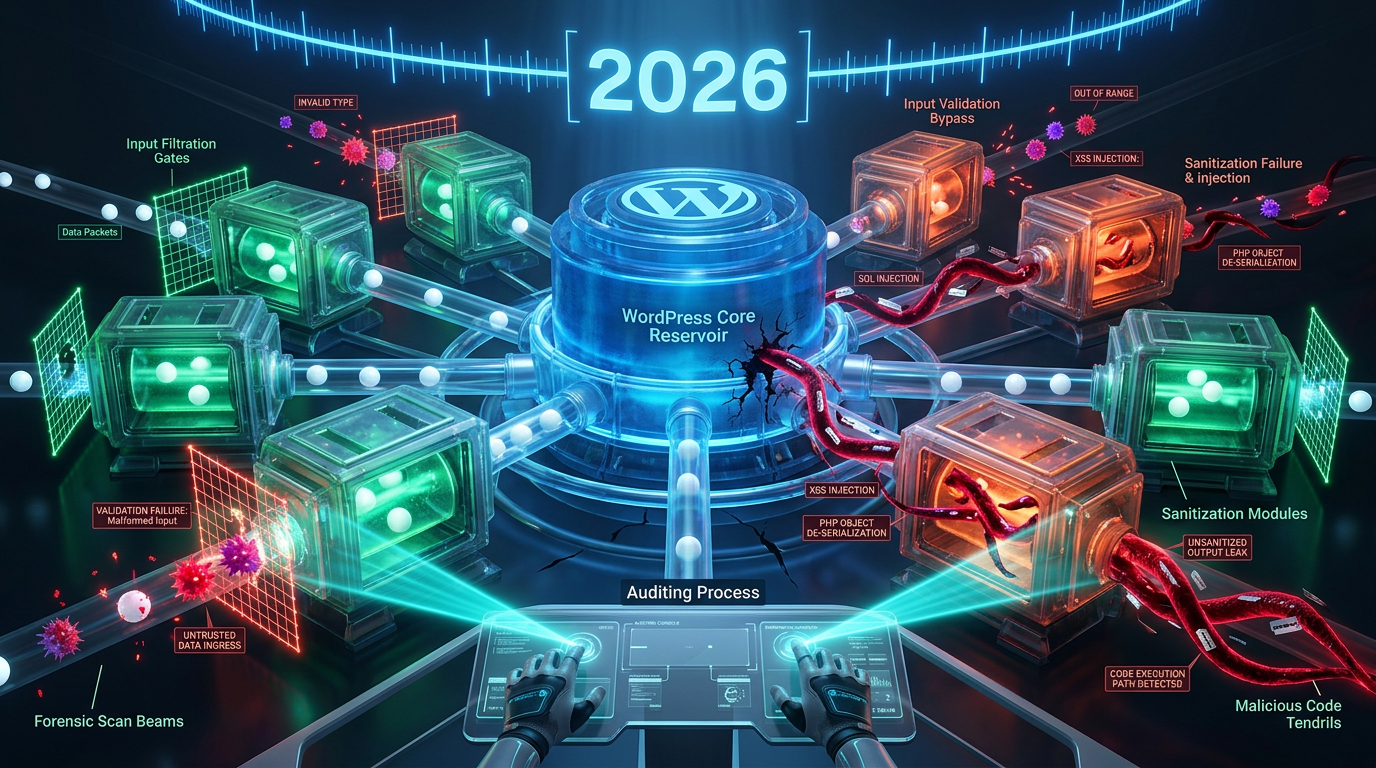
One primary concern is security. Many Edge AI plugins interact with third-party libraries or external services, creating potential entry points for attackers. Outdated code, insecure configurations, and excessive permissions granted to these plugins can be exploited. For example, a plugin that processes user submissions on the edge might have a vulnerability that allows for malicious code injection. This can occur even if the primary server-side code is secure.
It's crucial to scrutinize the source and update history of any WordPress Edge AI plugins. Regularly applying updates is non-negotiable, as developers often release patches for newly discovered vulnerabilities. Always evaluate the permissions a plugin requests, as unnecessary permissions can be a red flag. For insights on plugin security, check out The Silent Storytellers: Unmasking WordPress Plugins as Micro-CMSs & Their Security Footprint in 2026.
Performance Issues and Compatibility Problems
Another significant risk lies in performance. While Edge AI aims to improve speed, poorly optimized plugins can have the opposite effect. Running complex AI models on a user's device or a low-power edge device might consume excessive resources. This can lead to browser slowdowns, increased battery drain for mobile users, or reduced server performance for local edge deployments. Thorough testing across various devices and network conditions is essential before full deployment of WordPress Edge AI plugins.
Compatibility issues are also a constant battle in the WordPress ecosystem. A new WordPress Edge AI plugin might conflict with existing themes, other plugins, or different versions of WordPress itself. Such conflicts can lead to broken functionalities, site errors, or even complete site crashes. Staging environments are critical for testing new plugins before they go live on a production site.
Third-Party Dependencies and Data Privacy
Many Edge AI solutions rely on third-party libraries or external services for model deployment or updates. This introduces a supply chain risk. If a dependency has a vulnerability or undergoes malicious changes, it could compromise the entire WordPress site. Furthermore, while Edge AI improves privacy by processing data locally, understanding what data is still shared (even anonymously) with external services or model providers is paramount for GDPR, CCPA, and other privacy regulations compliance in 2026.
Always review the privacy policies associated with any WordPress Edge AI plugins, especially those that interact with external AI model hubs or frameworks. Transparency with users about data handling is not just a legal requirement but also builds trust. For more information on navigating data regulations, explore resources like the official GDPR website or the California Attorney General's page on CCPA.
Best Practices for Implementing WordPress Edge AI Plugins
To harness the power of WordPress Edge AI plugins effectively and mitigate potential risks, adhering to best practices is paramount. A strategic approach ensures both optimal performance and robust security for your WordPress site in 2026.
The dynamic nature of both WordPress and AI development means that continuous vigilance and adaptation are key. Don't set and forget; regularly review and update your AI plugin strategy as new technologies and threats emerge.
Thorough Research and Evaluation
- Review Developer Reputation: Opt for WordPress Edge AI plugins from reputable developers with a strong track record of security and support.
- Check Update Frequency: Frequent updates indicate active maintenance and responsiveness to bugs and security issues.
- Read Reviews and Community Feedback: Learn from the experiences of other users regarding stability, performance, and support.
- Examine Documentation: Clear and comprehensive documentation is a sign of a well-developed and supported plugin.
Security First Approach
Prioritize security above all else when dealing with WordPress Edge AI plugins. Conduct regular security audits of your site, paying special attention to how these plugins interact with other components.
Employ strong access control measures, limiting who can install or configure plugins. Use security plugins to monitor for malicious activity and ensure your WordPress core, themes, and all plugins are always up-to-date. Also, consider web application firewalls (WAFs) to add an extra layer of protection against common exploits targeting plugin vulnerabilities.
Staging Environment and Performance Testing
Before deploying any new WordPress Edge AI plugins to your live site, test them rigorously in a staging environment. This isolated sandbox allows you to identify compatibility conflicts, performance bottlenecks, and potential errors without impacting your live website.
Use tools to monitor page load times, CPU usage, and network requests when the plugin is active. Check performance across different browsers and devices, especially mobile, to ensure a consistent and positive user experience. Pay attention to how the plugin impacts JavaScript execution and resource consumption on the client-side.
Data Privacy and Compliance
Understand the data flow. Even if processing occurs at the edge, know what data is collected, where it goes, and how it's used. Ensure your privacy policy accurately reflects any data handling by WordPress Edge AI plugins and that you are compliant with relevant data protection regulations like GDPR and CCPA, which are pertinent in 2026.
Provide clear consent mechanisms if any personal data is processed, even if anonymously or locally. Ultimately, transparency builds trust with your users. For more on addressing privacy risks, delve into The Silent Conductors: How WordPress Plugins Dictate Browser Fingerprinting & Privacy Risks in 2026.
The Future Landscape of WordPress Edge AI Plugins in 2026 and Beyond
The trajectory for WordPress Edge AI plugins in 2026 and the coming years is one of rapid advancement and expansion. As AI models become more efficient and hardware capabilities on the edge continue to improve, the sophistication of what WordPress sites can achieve locally will grow exponentially.
We anticipate a deepening integration of these plugins with WordPress core functionalities. This will make AI-powered features even more seamless and accessible for site owners of all technical levels. The silent storytellers are only just beginning to tell their most compelling tales, powered by innovative WordPress Edge AI plugins.
Emerging Trends and Innovations
- Federated Learning on WordPress: Enabling collective AI model training without centralizing raw user data, enhancing privacy.
- TinyML Integration: Bringing highly optimized, small AI models to even more resource-constrained edge devices for lighter footprint applications.
- WebAssembly for AI: Wider adoption of WebAssembly to run AI models directly and efficiently in the browser across different platforms. For technical details on WebAssembly, refer to the official WebAssembly website.
- No-Code/Low-Code Edge AI: Simplifying the deployment and customization of Edge AI through intuitive WordPress interfaces.
Impact on WordPress Development and User Experience
The widespread adoption of WordPress Edge AI plugins will fundamentally alter how websites are developed and experienced. Designers and developers will have new tools to create highly personalized, responsive, and secure user interfaces. The focus will shift even further towards delivering instant value and adapting content dynamically based on the immediate context of each user.
For users, this means websites that are not just faster, but also smarter, more intuitive, and proactively tailored to their individual needs, without compromising their privacy. The era of truly intelligent WordPress experiences, powered by the micro-orchestration of Edge AI, is here.
Frequently Asked Questions

Written by Aras Akıncılar
Uzun yıllara dayanan WordPress deneyimine sahip bir siber güvenlik uzmanı olarak, eklenti ekosisteminin derinlemesine analizine odaklanıyorum. Güvenlik açıkları, performans düşüşleri ve uyumluluk sorunları üzerine hazırladığım makalelerle, WordPress kullanıcılarının sitelerini daha güvenli ve verimli hale getirmelerine yardımcı olmayı hedefliyorum.