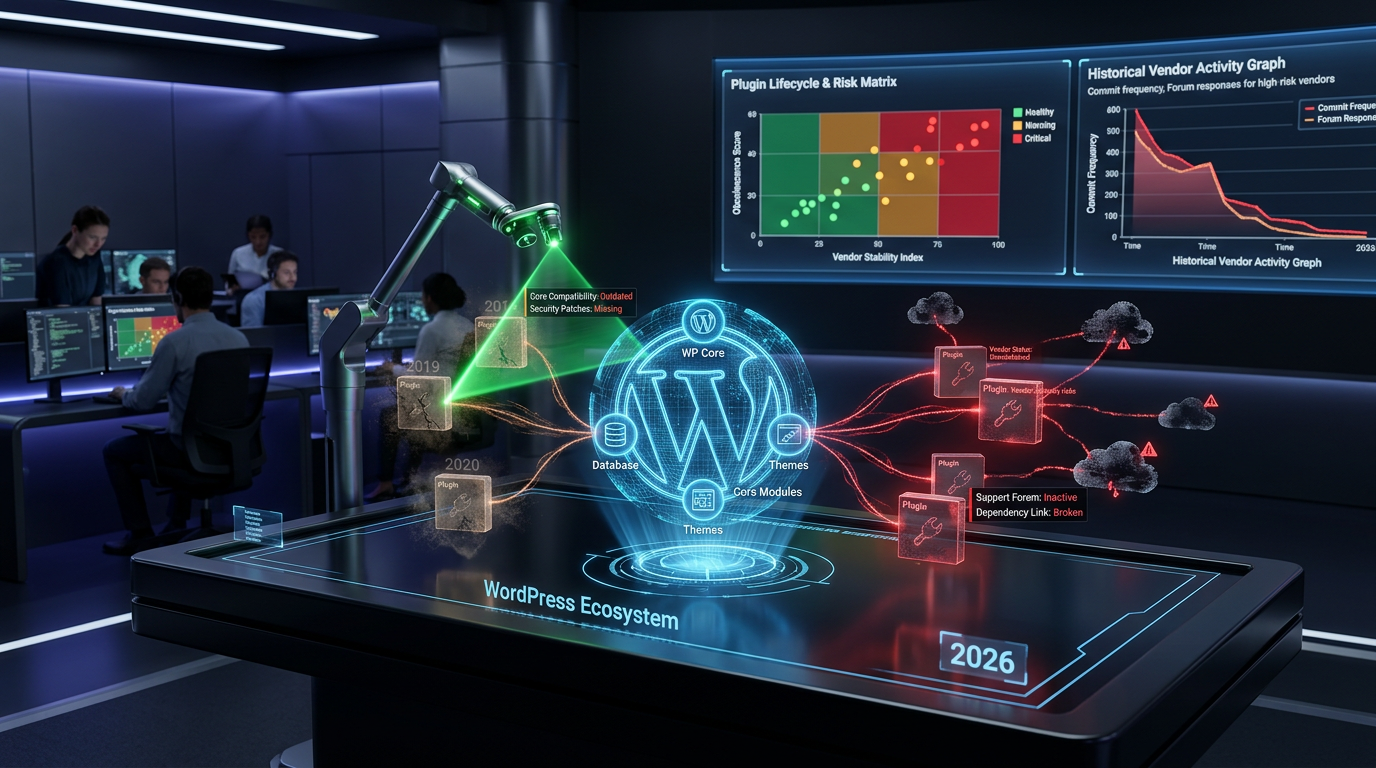
WordPress Infrastructure Mapping: Unmasking Digital Topography
In the evolving digital landscape of 2026, understanding the underlying architecture of a web presence is paramount. This is especially true for the millions of websites powered by WordPress, where a complex interplay of themes, plugins, and server configurations creates a unique digital topography. Our focus today is on WordPress Infrastructure Mapping, a critical, yet often overlooked, aspect of maintaining healthy and secure WordPress sites. This involves more than just knowing what plugins you have installed; it’s about comprehending how they interact, where data flows, and what dependencies exist, all of which directly impacts performance, security, and stability.
What is WordPress Infrastructure Mapping and Why Does It Matter in 2026?
At its core, WordPress Infrastructure Mapping is the process of visually or systematically documenting the components and interactions within a WordPress installation. Imagine it as creating a blueprint for your entire WordPress ecosystem. This isn't just about the WordPress core files themselves, but critically, it extends to themes, plugins, database structure, server environment, and even third-party services integrated with your site.
In 2026, with increasing reliance on microservices, cloud infrastructure, and highly interconnected digital ecosystems, the complexity of a typical WordPress setup has grown exponentially. Without proper WordPress Infrastructure Mapping, diagnosing issues, planning upgrades, or even assessing data security and privacy risks becomes a daunting task. This process allows developers, site owners, and security professionals to gain a comprehensive understanding of their site's architecture.
The Rise of Plugin Complexity in 2026
The strength of WordPress lies in its extensibility through plugins. However, this strength can also introduce significant complexity. Each plugin, while adding functionality, also adds its own code, database tables, and often, external dependencies. Understanding these layers is where effective WordPress Infrastructure Mapping truly shines. For more insights into how plugins integrate with existing structures, explore how WordPress plugins are extending HTML with custom elements.
Beyond a Simple Plugin List
Many site owners believe a simple list of installed plugins suffices. However, true infrastructure mapping delves deeper. It examines how plugins communicate with each other, what resources they consume, and what external APIs they depend on. This holistic view is crucial for proactive management.
Common Threats Revealed by Effective WordPress Infrastructure Mapping
One of the primary benefits of meticulous WordPress Infrastructure Mapping is the ability to preemptively identify and mitigate common threats. WordPress plugins, while powerful, are frequent vectors for vulnerabilities if not managed correctly. Therefore, our project specifically evaluates plugins to highlight these risks.
Outdated Code and Security Vulnerabilities
Mapping helps reveal plugins that are no longer maintained or incorporate outdated code. By charting these components, you can identify potential security gaps before they are exploited. An unpatched vulnerability in an obscure plugin can compromise an entire site, especially in the current threat landscape of 2026. This ties into the broader discussion of runtime code generation risks in WordPress plugins.
- Identification of EOL (End-of-Life) Plugins: Infrastructure mapping solutions can flag plugins that have ceased receiving updates, posing significant security risks.
- Version Tracking: It helps in keeping track of current plugin versions versus the latest available, ensuring timely updates.
Insecure Configurations and Excessive Permissions
Some plugins, especially during installation, might request or adopt overly broad permissions. Through infrastructure mapping, you can visualize these permission structures and identify potential oversteps. For instance, a plugin designed for image optimization might not need capabilities to modify user accounts or access sensitive data, yet misconfigurations can grant it such access. Understanding WordPress plugin privilege escalation is crucial here.
- Permission Auditing: Visualizing which files and database tables a plugin can access.
- Configuration Review: Identifying default or insecure settings that need hardening.
Performance Bottlenecks and Compatibility Issues
A detailed map can reveal which plugins are resource hogs, leading to slow load times and poor user experience. It can also highlight potential conflicts between plugins that use similar functionalities or libraries. As we advance into 2026, users expect lightning-fast websites, and performance is a major ranking factor. Consequently, WordPress Infrastructure Mapping helps to address these concerns, aligning with insights on how WordPress plugins remodel server-side rendering & Core Web Vitals.
- Resource Consumption Analysis: Pinpointing plugins that consume excessive CPU, memory, or database queries.
- Dependency Conflicts: Identifying plugins that might be using conflicting versions of libraries, leading to errors.
Third-Party Dependencies and Supply Chain Risks
Many WordPress plugins rely on external libraries, APIs, or services. Mapping these third-party dependencies is crucial for understanding the full attack surface. A vulnerability in a widely used external library can impact hundreds or thousands of WordPress sites via seemingly innocuous plugins, a significant concern in 2026. This connects to discussions on WordPress plugin supply chain integrity.
- External API Integrations: Documenting all connections to external services is vital.
- Library Versioning: Tracking the versions of embedded third-party libraries for known vulnerabilities.
How to Conduct Effective WordPress Infrastructure Mapping for Plugins
So, how does one go about creating this invaluable blueprint? While there isn't a single "magic bullet" plugin for all your mapping needs, a combination of tools, manual processes, and best practices will yield the best results for comprehensive WordPress Infrastructure Mapping.
Automated Tools and Scanners
Several specialized tools, both free and premium, can assist in scanning your WordPress installation for its components. These tools often provide an initial overview of installed plugins, themes, and their core characteristics.
- Security Scanners: Tools like Wordfence, Sucuri, or MalCare can identify installed plugins, warn about outdated versions, and sometimes flag known vulnerabilities. Consider exploring resources from industry leaders like Wordfence or Sucuri for robust security scanning.
- Performance Profilers: Plugins such as Query Monitor or New Relic can help identify resource-intensive plugins by logging database queries and PHP execution times efficiently.
- Dependency Trackers: Some advanced analysis tools can recursively scan plugin code for external library dependencies.
Manual Review and Documentation
Automated tools are a great starting point, but a certain degree of manual intervention is often necessary for truly granular WordPress Infrastructure Mapping. This involves dissecting plugin descriptions, documentation, and sometimes, even the code itself for deeper insights.
- Plugin Documentation Analysis: Reviewing each plugin's official documentation for details on its features, dependencies, and security practices.
- Code Inspection (for developers): Examining plugin source code to understand its hooks, filters, database interactions, and external calls in detail.
- Database Schema Review: Identifying which tables and data fields each plugin creates or modifies.
Visualization and Reporting
Once you've gathered the data, visualizing it is key to making sense of the complexity. Flowcharts, diagrams, and comprehensive reports are essential output for effective WordPress Infrastructure Mapping. Visual representation clarifies complex relationships.
- Network Diagrams: Illustrating how plugins interact with each other and external services.
- Database Relationship Maps: Visualizing the tables and their relationships within your WordPress database.
- Custom Dashboards: Creating tailored dashboards that display critical information about your plugin ecosystem, including update statuses, security alerts, and performance metrics.
Best Practices for Maintaining a Mapped WordPress Infrastructure
Mapping your infrastructure isn't a one-time task; it's an ongoing process. As plugins are updated, added, or removed, your digital topography changes. Therefore, maintaining the accuracy of your WordPress Infrastructure Mapping is crucial.
Regular Audits and Updates
Schedule periodic reviews of your infrastructure map. This should coincide with major WordPress core updates, plugin updates, or significant changes to your website's functionality. Regular audits ensure your map remains an accurate representation of your live site.
Furthermore, promptly updating plugins and themes is a foundational security best practice. Your WordPress Infrastructure Mapping process should highlight which components require immediate attention.
Strict Plugin Vetting Process
Before installing any new plugin, integrate the mapping process into your vetting workflow. Understand its dependencies, resource requirements, and security implications upfront. Only install plugins from reputable sources and those with active development and good reviews.
Given the risks associated with third-party components, a robust vetting process for new plugins is more critical than ever in 2026. For further guidelines, refer to the official WordPress Plugin Handbook.
Version Control and Staging Environments
Utilize version control for your themes and custom plugins. Always test new plugins or significant updates in a staging environment before deploying them to your live site. This allows you to observe their impact on performance and compatibility without affecting your production environment, and refine your WordPress Infrastructure Mapping before live deployment.
Conclusion: The Future of WordPress Site Management in 2026
As WordPress continues to evolve, becoming an even more robust and feature-rich platform, the complexity of its underlying infrastructure will only increase. Proactive and meticulous WordPress Infrastructure Mapping is no longer a luxury but a necessity for any serious website owner or developer in 2026. By understanding the intricate layers of your WordPress site, from its core to every installed plugin and external dependency, you are better equipped to ensure its security, optimize its performance, and maintain its stability.
Our ongoing project, dedicated to analyzing and evaluating WordPress plugins, continually reinforces the value of this deep understanding. Through careful review of functionalities, potential risks, and common threats, we aim to provide the insights necessary for maintaining secure, stable, and high-performance WordPress websites. Embrace WordPress Infrastructure Mapping today to safeguard your digital future.
Frequently Asked Questions

Written by Aras Akıncılar
Uzun yıllara dayanan WordPress deneyimine sahip bir siber güvenlik uzmanı olarak, eklenti ekosisteminin derinlemesine analizine odaklanıyorum. Güvenlik açıkları, performans düşüşleri ve uyumluluk sorunları üzerine hazırladığım makalelerle, WordPress kullanıcılarının sitelerini daha güvenli ve verimli hale getirmelerine yardımcı olmayı hedefliyorum.