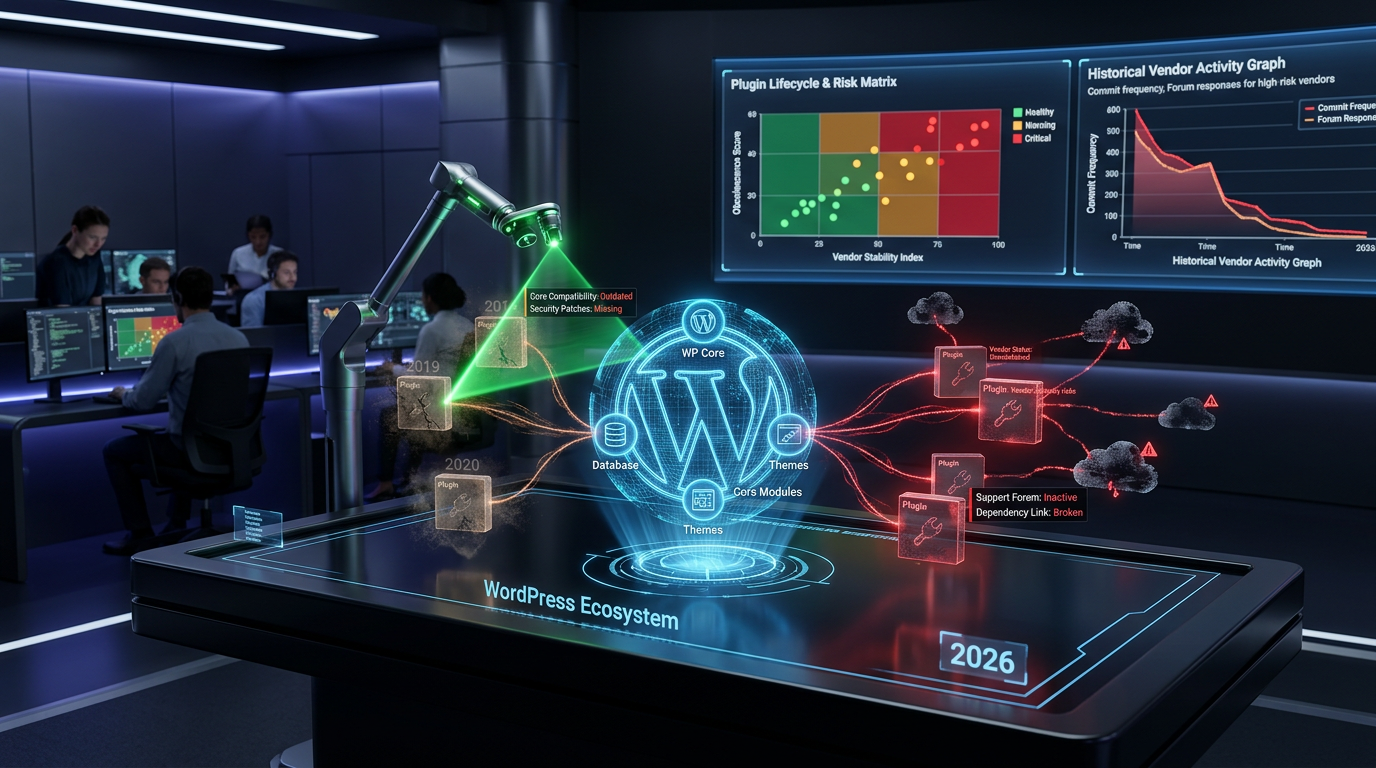
Understanding WordPress Plugin Data Remnants: A Deep Dive into Digital Sedimentation (2026)
In the evolving digital landscape of 2026, understanding WordPress plugin data remnants is more crucial than ever for maintaining a clean, secure, and performant website. These often-overlooked digital sedimentations are the leftover files, database entries, and configuration settings that remain long after a WordPress plugin has been deactivated or even deleted. While seemingly innocuous, these remnants can pose significant security risks, degrade site performance, and complicate future website management. This article will explore the nature of these leftovers, their potential impact, and best practices for their responsible management within the WordPress ecosystem.
The accumulation of such remnants can sometimes involve temporal drift and event sequencing vulnerabilities, making it challenging to pinpoint the origin of performance issues or security gaps.
The Invisible Footprint: What Are WordPress Plugin Data Remnants?
When you install and activate a WordPress plugin, it often creates various digital assets. These can range from new tables in your WordPress database, custom post types, options in the wp_options table, uploaded files in your wp-content directory, and even scheduled cron jobs. The problem arises when these plugins are no longer needed.
Many plugins, upon deactivation or deletion, do not fully clean up after themselves. They might leave behind their database tables, orphaned media files, or lingering entries in the options table. These persistent bits and pieces are what we refer to as WordPress plugin data remnants. They are the digital equivalent of archaeological layers, sometimes holding valuable, sometimes detrimental, information about your site's past. Understanding how WordPress plugins function as microservices can shed more light on the dispersed nature of these remnants.
Types of Plugin Data Leftovers
- Database Tables: Plugins often create their own custom database tables to store specific data. If not properly removed, these tables can bloat your database and slow down queries. This directly impacts data storage and schema integrity.
- Database Options: Entries in the
wp_optionstable, even for deleted plugins, can accumulate, leading to performance issues and unnecessary data processing. These remnants contribute significantly to database clutter. - Files and Directories: Plugins frequently create directories within
wp-content/uploadsorwp-content/plugins/[plugin-name]/for configuration files, cached data, or temporary assets. These can remain long after the plugin is gone. - Scheduled Events (Cron Jobs): Some plugins schedule recurring tasks. Deactivating a plugin doesn't always clear these scheduled events, which can continue to run in the background, consuming resources.
- Shortcodes and Menu Items: While not strictly "data," orphaned shortcodes can appear as broken content on your site, and menu items linked to non-existent plugin pages can create a poor user experience.
Security Implications of Lingering WordPress Plugin Data Remnants
Beyond performance concerns, the security risks associated with WordPress plugin data remnants are significant and often underestimated. These remnants can become vulnerabilities, especially if they contain sensitive information or leave open pathways for malicious attacks. Managing these plugin data remnants is crucial for site security.
Potential Security Vulnerabilities
- Exposed Sensitive Data: Old database tables might still contain user data, API keys, or other sensitive information. If a new vulnerability is discovered in an older version of a plugin (even if deleted), these lingering tables could be exploited, leading to data breaches. This highlights the importance of robust data security and privacy measures.
- Orphaned Files with Exploitable Code: Sometimes, plugin files left behind might contain outdated or insecure code that could be reactivated or exploited by attackers if they gain access to your server.
- Unpatched Configuration Files: Configuration files for plugins might contain credentials or paths that, if discovered, could give an attacker an entry point into your system.
- Obscurity by Neglect: The sheer volume of unknown and unused files and database entries makes it harder to identify and patch actual vulnerabilities. It provides more "noise" for attackers to hide in. This can lead to complex digital forensics and incident response scenarios.
In 2026, with cyber threats becoming increasingly sophisticated, proactive management of these digital residues is not just good practice; it's a security imperative. Regular audits and cleanups are essential to prevent these WordPress plugin data remnants from becoming a liability. The National Institute of Standards and Technology (NIST) provides valuable guidelines on technical guide to information security testing and assessment, which can be adapted for WordPress environments.
Performance Degradation and Website Bloat from Data Remnants
The accumulation of WordPress plugin data remnants can have a tangible negative impact on your website's performance. Every extra table in your database, every unused file on your server, and every lingering option entry contributes to bloat, which directly translates to slower loading times and a degraded user experience. Addressing these plugin data remnants is key to a fast site.
How Remnants Affect Performance
- Database Bloat: A larger database takes longer to back up, optimize, and process queries. Even if tables aren't actively used, their presence can slow down database operations for actively used data.
- Increased Backup Sizes: Redundant data means larger backup files, consuming more storage space and taking longer to create and restore.
- Slower File System Operations: A cluttered
wp-contentdirectory with thousands of old plugin files can make file system scans, backups, and even theme/plugin updates slower. - Overhead on Server Resources: While often minor, lingering cron jobs or even simply scanning numerous unused files during certain operations can consume unnecessary CPU and memory resources.
Optimizing your WordPress site for speed often focuses on image compression, caching, and CDN usage. However, addressing the underlying issue of WordPress plugin data remnants is equally important for a truly lean and fast website in 2026. This also ties into how plugins might affect Core Web Vitals and server-side rendering.
Best Practices for Managing WordPress Plugin Data Remnants
Effectively dealing with WordPress plugin data remnants requires a proactive approach and a combination of careful selection, regular maintenance, and informed cleanup procedures. Preventing accumulation is just as important as removing existing leftovers.
Strategies for a Cleaner WordPress Site
- Choose Plugins Wisely: Before installing, check if the plugin developers have included proper uninstall routines. A good plugin will have functions designed to clean up its data upon deactivation/deletion. Look for information in their documentation or support forums. Consider how this impacts the supply chain integrity of your WordPress site.
- Test in a Staging Environment: Always test new plugins on a staging site before deploying them to your live website. This allows you to observe their behavior, including what data they create and how cleanly they de-install.
- Regular Database Optimization: Utilize tools provided by your hosting provider or plugins like WP-Optimize or Advanced Database Cleaner to regularly optimize your database. These often identify and allow you to remove orphaned options, transients, and leftover tables.
- Manual Database Cleanup (with Caution): For advanced users, direct inspection of the database via phpMyAdmin can help identify and remove tables clearly associated with deleted plugins. Always, always take a full database backup before attempting this.
- File System Audits: Periodically review your
wp-contentdirectory, particularlywp-content/pluginsandwp-content/uploads, for directories and files belonging to plugins that are no longer active. You can often remove these via FTP or your hosting file manager. - Use a Cleanup Plugin for Remnants: Some plugins are specifically designed to help identify and remove WordPress plugin data remnants. Tools like "Plugin Organizer" or "WP Reset" (used carefully) can offer features to manage and reset plugin data. However, exercise extreme caution and backup your site before using such powerful tools.
- Backup Regularly: This cannot be stressed enough. A robust backup strategy is your ultimate safety net when performing any cleanup operations, including the removal of plugin data remnants. The WordPress Codex offers comprehensive advice on WordPress Backups.
The Future of Plugin Cleanliness in WordPress (2026 and Beyond)
As WordPress continues to evolve, there's a growing awareness within the developer community about the importance of proper data management. We are seeing more plugins incorporating dedicated uninstall hooks and options to remove all data upon deletion. Best practices established in 2026 will likely influence future core WordPress development, potentially leading to more standardized cleanup mechanisms. End-users, however, will always bear the ultimate responsibility for maintaining a healthy and optimized website.
By understanding what WordPress plugin data remnants are, their potential risks, and how to manage them, site administrators can ensure their WordPress installations remain secure, performant, and clutter-free for years to come. This diligent approach is critical for the long-term success and stability of any WordPress-powered online presence.
Frequently Asked Questions

Written by Aras Akıncılar
Uzun yıllara dayanan WordPress deneyimine sahip bir siber güvenlik uzmanı olarak, eklenti ekosisteminin derinlemesine analizine odaklanıyorum. Güvenlik açıkları, performans düşüşleri ve uyumluluk sorunları üzerine hazırladığım makalelerle, WordPress kullanıcılarının sitelerini daha güvenli ve verimli hale getirmelerine yardımcı olmayı hedefliyorum.