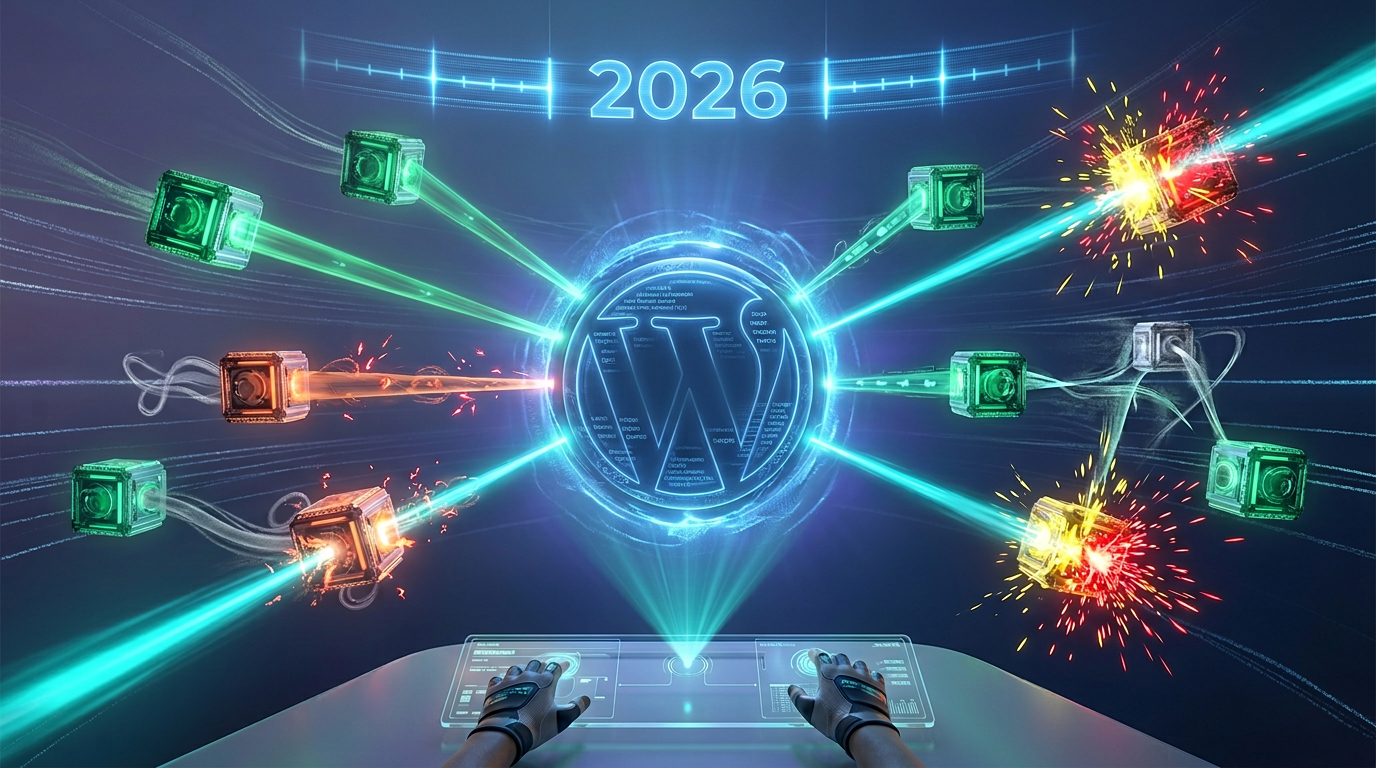
The Autoload Architects: Auditing WordPress Plugins for Class Loading Conflicts & Dependency Hijacking in 2026
In the dynamic landscape of web development, maintaining a secure, stable, and high-performance WordPress website hinges significantly on the quality and integrity of its plugins. A critical, often overlooked aspect of plugin quality is **WordPress plugin class loading**. Improper class loading mechanisms can lead to a cascade of issues, from subtle performance lags to outright site crashes and even security vulnerabilities. As we navigate 2026, understanding how PHP classes are loaded within the WordPress ecosystem and how to audit plugins for potential conflicts and dependency hijacking is more important than ever for developers and site administrators alike.
Our in-depth analysis of WordPress plugins reveals that many common problems stem from developers overlooking best practices in dependency management and autoloading. This article will dissect these challenges, providing practical insights and real-world examples to help you maintain a robust WordPress environment.

Understanding WordPress Plugin Class Loading and Autoloading
At its core, **WordPress plugin class loading** refers to the process by which PHP classes, functions, and files defined within a plugin are made available for use by WordPress and other plugins. Historically, developers might have used `require` or `include` statements for every file. However, modern PHP, and consequently modern WordPress development, heavily relies on autoloading.
Autoloading is a mechanism that attempts to load a class or interface automatically when it's first used. Instead of manually including every file, an autoloader function registers itself with PHP, and when a class is referenced that hasn't been defined, the autoloader is called to locate and include the corresponding file. This significantly improves performance and simplifies development. The most common autoloader standard in the PHP world is PSR-4, which maps namespaces to file paths.
The Role of Composer and Namespacing
In 2026, most well-maintained WordPress plugins leverage Composer for dependency management and follow PSR-4 for class autoloading. Composer not only manages third-party libraries but also generates an optimized autoloader for a plugin's own classes. Namespacing provides a way to encapsulate items, preventing name collisions between different parts of an application. This is crucial in an environment like WordPress, where numerous plugins operate simultaneously.
The Dangers: Class Loading Conflicts and Dependency Hijacking
Despite the benefits of modern autoloading, the shared nature of the WordPress environment can still lead to significant problems. When multiple plugins, especially those from different developers, introduce the same class names or use conflicting versions of common libraries, issues arise. This is where the complexities of **WordPress plugin class loading** truly manifest.
Class Name Collisions
A classic problem is direct class name collision. If two plugins define a class with the identical name (e.g., `MyHelperClass`) without proper namespacing, the plugin loaded later might overwrite or fail to load its version, leading to fatal errors or unpredictable behavior. Even with namespaces, if different plugins use different versions of the *same* namespaced library (e.g., `GuzzleHttp\Client` v6 and v7), runtime conflicts can occur.
Dependency Hijacking
Dependency hijacking is a more subtle and dangerous form of conflict. It occurs when one plugin bundles a common library, and another plugin expects a different version of that same library. If the first plugin's version of the library is loaded globally, the second plugin might unintentionally use it instead of its own, potentially leading to security vulnerabilities or functional bugs. For example, if Plugin A loads `monolog/monolog` version 1 and Plugin B expects version 2 (which might have security fixes or different API calls), Plugin B could be forced to use the outdated, vulnerable version. This is a significant concern for WordPress security in 2026.
To mitigate this, developers often "prefix" or "isolate" their dependencies within their plugins, but this isn't always done correctly or consistently. For more details on PHP's approach to dependencies, refer to the official WordPress Developer Resources which often discuss these topics.
Auditing Techniques for WordPress Plugin Class Loading Issues
Proactive auditing is essential to identify and prevent class loading conflicts and dependency hijacking. Here are key techniques for evaluating **WordPress plugin class loading** practices:
- Review `composer.json` and `composer.lock` files: Examine a plugin's `composer.json` file to understand its direct dependencies and autoloader configuration (e.g., `autoload-dev`, `psr-4`). The `composer.lock` file provides the exact versions of all direct and indirect dependencies. Look for outdated dependencies or popular libraries without version constraints.
- Check for Global Class/Function Declarations: While less common in modern plugins, scan plugin files for classes or functions declared in the global namespace. These are prime candidates for conflicts.
- Analyze Autoloader Configuration: Investigate how the plugin registers its autoloader. Does it use Composer's autoloader? Is it adding custom autoloader functions? Multiple, poorly implemented autoloaders can interfere with each other.
- Identify Vendored Dependencies: Look for a `vendor` directory within the plugin itself. If a plugin bundles its own copy of third-party libraries (which is common), verify if it has been "prefixed" or "namespaced" to avoid collisions with other plugins that might bundle the same library.
- Static Analysis Tools: Utilize PHP static analysis tools like PHPStan, Psalm, or Rector. These tools can often detect potential class conflicts, deprecated code, and other architectural issues before runtime.
- Runtime Conflict Detection: For active sites, use tools or custom scripts that log class definitions at runtime. You can hook into PHP's class loading mechanisms (though this requires advanced knowledge) or simply check for defined classes after plugin activation.

Manual Code Review Best Practices
A manual code review remains invaluable. Focus on:
- The use of `namespace` declarations at the top of PHP files.
- How external libraries are included or required.
- Any custom autoloader functions (e.g., `spl_autoload_register`).
- Version constraints in `composer.json` – `^` (caret) for minor-compatible updates is good, `*` or no version is a red flag.
Best Practices for Plugin Development and Management in 2026
Preventing **WordPress plugin class loading** issues starts with good development practices and extends to diligent site management. By adopting these strategies, you can significantly reduce the risk of conflicts and enhance the overall stability of your WordPress site.
For Plugin Developers:
- Always Namespace Your Code: Encapsulate all your plugin's custom classes within a unique top-level namespace. This is the single most effective way to prevent direct class name collisions.
- Use Composer for Dependency Management: Leverage Composer not just for third-party libraries but also for autoloading your own plugin's classes via PSR-4.
- Prefix or Isolate Third-Party Dependencies: If you must bundle common libraries (e.g., Guzzle, Monolog) directly within your plugin, use tools like PHP-Scoper to prefix their namespaces. This isolates them to your plugin, preventing conflicts with other plugins using different versions.
- Declare Strict Version Constraints: In `composer.json`, use semantic versioning with appropriate constraints (e.g., `^1.0` or `~1.0.0`). Avoid overly broad constraints like `*`.
- Test Thoroughly: Use automated testing, including unit and integration tests, to catch issues early. Test your plugin alongside other popular plugins to identify compatibility issues.
For WordPress Site Administrators:
- Choose Reputable Plugins: Opt for plugins from well-known developers with good reviews, active support, and regular updates.
- Keep Plugins Updated: Always run the latest versions of your plugins. Developers often release updates to fix bugs, improve performance, and address security vulnerabilities, including those related to dependencies.
- Staging Environment Testing: Never update or install new plugins directly on a live site. Use a staging environment to test thoroughly for conflicts, especially after major WordPress or plugin updates.
- Monitor Error Logs: Regularly check your WordPress debug log and server error logs. These can provide crucial clues about class loading failures or conflicts.
- Be Wary of "All-in-One" Plugins: While convenient, plugins that bundle a vast array of functionalities and external libraries might increase the surface area for conflicts. Evaluate their necessity.
Conclusion
The intricate world of **WordPress plugin class loading** is a cornerstone of a well-functioning WordPress site. As the complexity of WordPress sites grows in 2026, so does the potential for class loading conflicts and dependency hijacking. By understanding the underlying mechanisms, employing robust auditing techniques, and adhering to best practices in both development and site management, we can collectively ensure the security, stability, and performance of the WordPress ecosystem. Diligence in this area is not merely a technicality; it's a fundamental aspect of safeguarding your digital presence.
Frequently Asked Questions

Written by Aras Akıncılar
Uzun yıllara dayanan WordPress deneyimine sahip bir siber güvenlik uzmanı olarak, eklenti ekosisteminin derinlemesine analizine odaklanıyorum. Güvenlik açıkları, performans düşüşleri ve uyumluluk sorunları üzerine hazırladığım makalelerle, WordPress kullanıcılarının sitelerini daha güvenli ve verimli hale getirmelerine yardımcı olmayı hedefliyorum.