WordPress Cross-Compilation Plugin Security: Unmasking Binary Injection Risks
In the dynamic landscape of web development, WordPress continues to dominate, powering over 43% of all websites. Its extensive plugin ecosystem is a cornerstone of its flexibility and power. However, with great power comes significant responsibility, especially concerning security. A less discussed but increasingly pertinent threat in 2026 is the potential for vulnerabilities arising from WordPress cross-compilation plugin security, particularly binary injection risks. This article delves into how cross-compilation can introduce subtle yet severe security challenges within WordPress plugins, and what website owners and developers need to understand to mitigate these risks effectively.
Understanding Cross-Compilation in the Context of WordPress Plugins
Cross-compilation, in simplified terms, is the process of compiling code on one computer system (the host) to run on another computer system (the target). While less common in traditional PHP-based WordPress plugins due to PHP's interpreted nature, it becomes relevant when plugins incorporate compiled binaries or leverage technologies like WebAssembly (Wasm) or native extensions for performance-critical tasks. These binaries, often written in languages like C++, Rust, or Go, are then integrated into the plugin.
The adoption of such approaches is growing as developers push the boundaries of what WordPress plugins can achieve, moving beyond purely PHP functionalities. Consequently, this introduces new vectors for attack that differ significantly from typical PHP-based vulnerabilities such as SQL injection or XSS. For more insights on diverse plugin vulnerabilities, you might be interested in Auditing WordPress Plugins for API Keys, Secrets & External Service Exposure in 2026. Ensuring robust WordPress cross-compilation plugin security is vital as these technologies become more prevalent.
When Does Cross-Compilation Become a Factor for WordPress?
- Performance-Intensive Operations: Plugins requiring high computational power, such as advanced image processing, video encoding, or complex mathematical calculations, might use compiled binaries for speed.
- System-Level Integrations: Furthermore, plugins interacting directly with the server's operating system or specific hardware components (e.g., custom cryptography modules) may employ compiled components.
- Legacy Code Integration: In some cases, existing proprietary software or libraries written in compiled languages are integrated into a WordPress plugin for broader compatibility.
- WebAssembly (Wasm) Adoption: WebAssembly is gaining traction for web applications, including potential future WordPress plugin enhancements, allowing near-native performance for code written in various languages.
The Insidious Threat of Binary Injection in WordPress Cross-Compilation Plugin Security
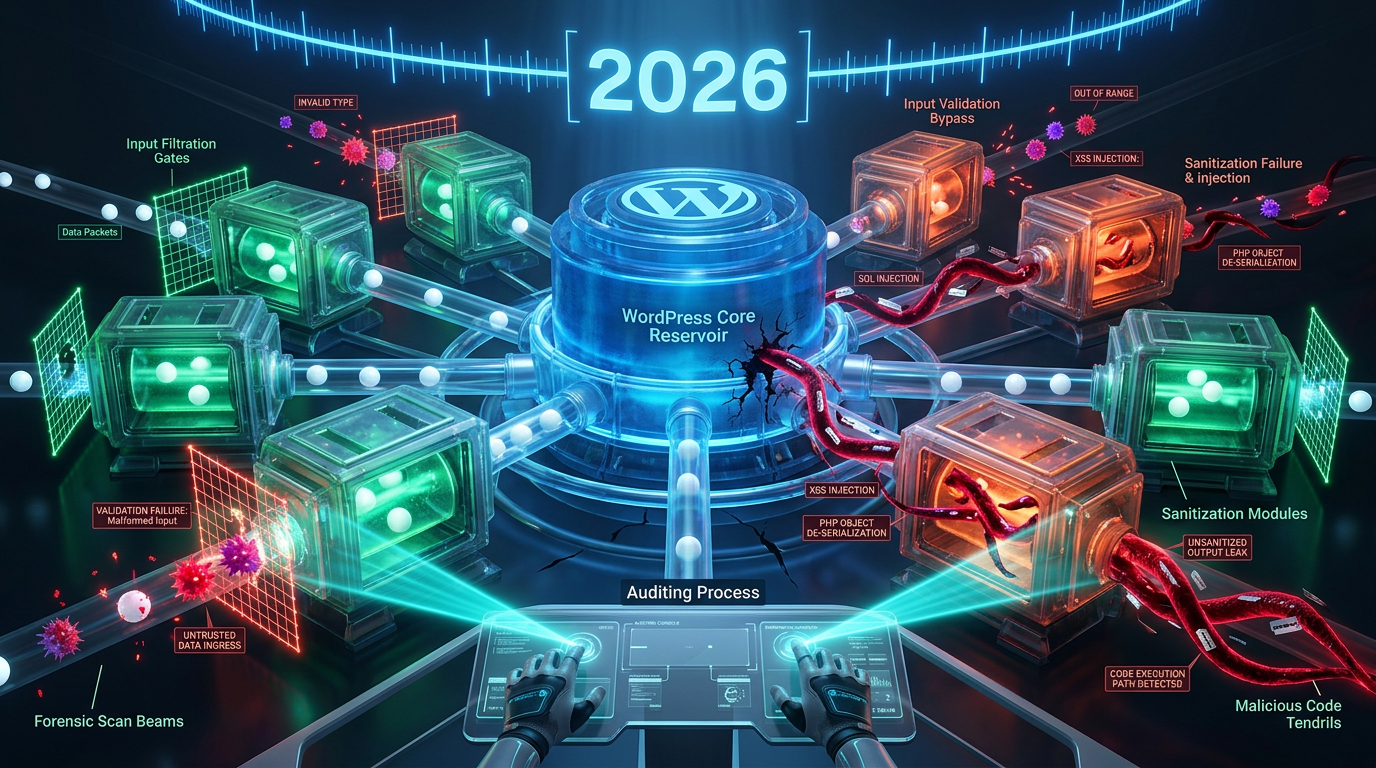
Binary injection refers to the act of introducing malicious compiled code or altering legitimate compiled code within a software component. In the realm of WordPress plugins utilizing cross-compiled elements, this can manifest in several dangerous ways. Unlike injecting malicious PHP code, which often relies on file system permissions or interpreter vulnerabilities, binary injection can involve compromising the compilation process itself or replacing legitimate binaries with malicious ones. Delving deeper into compiler-related risks, another area of concern is explored in The Silent Compilers: Unmasking Just-In-Time Compilation & Runtime Code Generation Risks in WordPress Plugins (2026).
The core challenge with binary injection is its stealth. Malicious compiled code can be significantly harder to detect than script-based attacks, as it often bypasses standard web application firewalls (WAFs) and code scanners designed primarily for interpreted languages. This makes WordPress cross-compilation plugin security a nuanced area requiring specialized attention in 2026.
How Binary Injection Can Occur
Malicious binaries can find their way into a plugin through various stages:
- Supply Chain Attacks: A malicious actor might compromise the build environment of a plugin developer, injecting harmful code during the cross-compilation phase. This modified, seemingly legitimate binary is then distributed as part of the plugin.
- Compromised Dependencies: If a WordPress plugin relies on third-party libraries or modules that are themselves cross-compiled, and one of these dependencies is compromised, the vulnerability can propagate to the main plugin. For more on managing plugin dependencies and potential vulnerabilities, see discussions on Unearthing Latent Technical Debt in WordPress Plugins (2026).
- Direct Replacement on Server: While less sophisticated, an attacker who gains file system access to a WordPress installation could replace legitimate plugin binaries with malicious versions. However, detection is often easier in this scenario.
- Update Mechanism Exploits: If a plugin's update mechanism for its compiled components is not secure, an attacker could potentially push a malicious update. This highlights a critical attack vector for WordPress cross-compilation plugin security.
Identifying and Mitigating Risks in WordPress Cross-Compilation Plugin Security
Addressing the security concerns around cross-compiled components requires a multi-faceted approach, involving both plugin developers and website administrators. The focus, therefore, should be on ensuring the integrity of the binaries and the processes that produce them.
Best Practices for Developers
- Secure Build Pipelines: Developers must implement highly secure build environments that are isolated and frequently audited. This includes using robust version control for all source code, including compiled components' source.
- Code Signing: Digitally signing compiled binaries provides a verifiable authenticity check. Website owners can then confirm that the binary has not been tampered with since it was signed by the developer.
- Dependency Auditing: Thoroughly vet all third-party libraries and dependencies, especially those that are cross-compiled. Utilize tools for vulnerability scanning of these dependencies consistently.
- Minimize Privileges: Design compiled components to operate with the absolute minimum necessary privileges. This limits the damage an injected binary could inflict.
- Regular Security Reviews: Conduct static and dynamic analysis of both the source code and the compiled binaries to identify potential vulnerabilities. These practices are crucial for maintaining strong WordPress cross-compilation plugin security.
Recommendations for WordPress Website Administrators
- Source from Reputable Developers: Only install plugins from trusted sources and developers with a strong security track record. This is even more critical when a plugin might involve compiled code.
- Keep Everything Updated: Ensure the WordPress core, themes, and all plugins are always running the latest versions. Updates often contain critical security patches. Staying updated is a foundational step in addressing Digital Identity & Authentication Risks in WordPress Plugins (2026).
- Implement Strong File Integrity Monitoring (FIM): FIM tools can detect unauthorized changes to plugin files, including binaries. This is crucial for identifying if a legitimate binary has been replaced by a malicious one.
- Use a Robust WAF: While WAFs primarily focus on interpreted code, advanced WAFs can sometimes identify unusual behavior indicative of compromised binaries or their execution attempts. Cloudflare offers advanced WAF solutions that can help in this regard: Cloudflare WAF.
- Regular Backups: Maintain comprehensive and redundant backups of your entire WordPress installation, including the database and all files. This is your last line of defense against any severe compromise. For general backup best practices, WordPress provides useful guides: WordPress Backups.
- Understand Plugin Permissions: Be mindful of the permissions requested by plugins, especially those that might involve interacting with the server at a lower level.
- Penetration Testing: For high-value WordPress installations, regular penetration testing can help uncover subtle vulnerabilities, including those related to WordPress cross-compilation plugin security.
The Future Landscape of WordPress Cross-Compilation Plugin Security
As WordPress continues to evolve, embracing new technologies and pushing performance boundaries, the integration of cross-compiled components is likely to increase. WebAssembly is a prime example of this trend, offering significant performance gains but also introducing new security considerations that differ from traditional PHP-centric development.
In 2026, the industry is witnessing a growing awareness of software supply chain security, and this extends directly to WordPress plugins utilizing compiled elements. The emphasis is shifting towards proactive security measures, secure-by-design principles, and continuous monitoring throughout a plugin's lifecycle.
Developers who provide plugins with compiled binaries will need to go above and beyond in demonstrating the integrity and security of their creations, potentially through transparency reports, audited build processes, and adherence to industry-standard security frameworks. For website owners, vigilance and an understanding of these advanced threat vectors will be paramount to safeguarding their digital assets and ensuring robust WordPress cross-compilation plugin security.
Conclusion: Fortifying WordPress Against Advanced Threats
The topic of WordPress cross-compilation plugin security may seem niche, but its implications are far-reaching. As plugin functionalities become more complex and leverage compiled code for efficiency, the attack surface expands. Binary injection is a sophisticated threat that demands an equally sophisticated defense strategy.
By understanding the mechanisms of cross-compilation, the potential for binary injection, and by implementing stringent security measures both at the development and operational stages, the WordPress ecosystem can continue to thrive securely. Staying informed and adopting best practices in this evolving threat landscape is not merely a recommendation but a necessity for anyone serious about the security and integrity of their WordPress websites in 2026 and beyond.
Frequently Asked Questions

Written by Aras Akıncılar
Uzun yıllara dayanan WordPress deneyimine sahip bir siber güvenlik uzmanı olarak, eklenti ekosisteminin derinlemesine analizine odaklanıyorum. Güvenlik açıkları, performans düşüşleri ve uyumluluk sorunları üzerine hazırladığım makalelerle, WordPress kullanıcılarının sitelerini daha güvenli ve verimli hale getirmelerine yardımcı olmayı hedefliyorum.