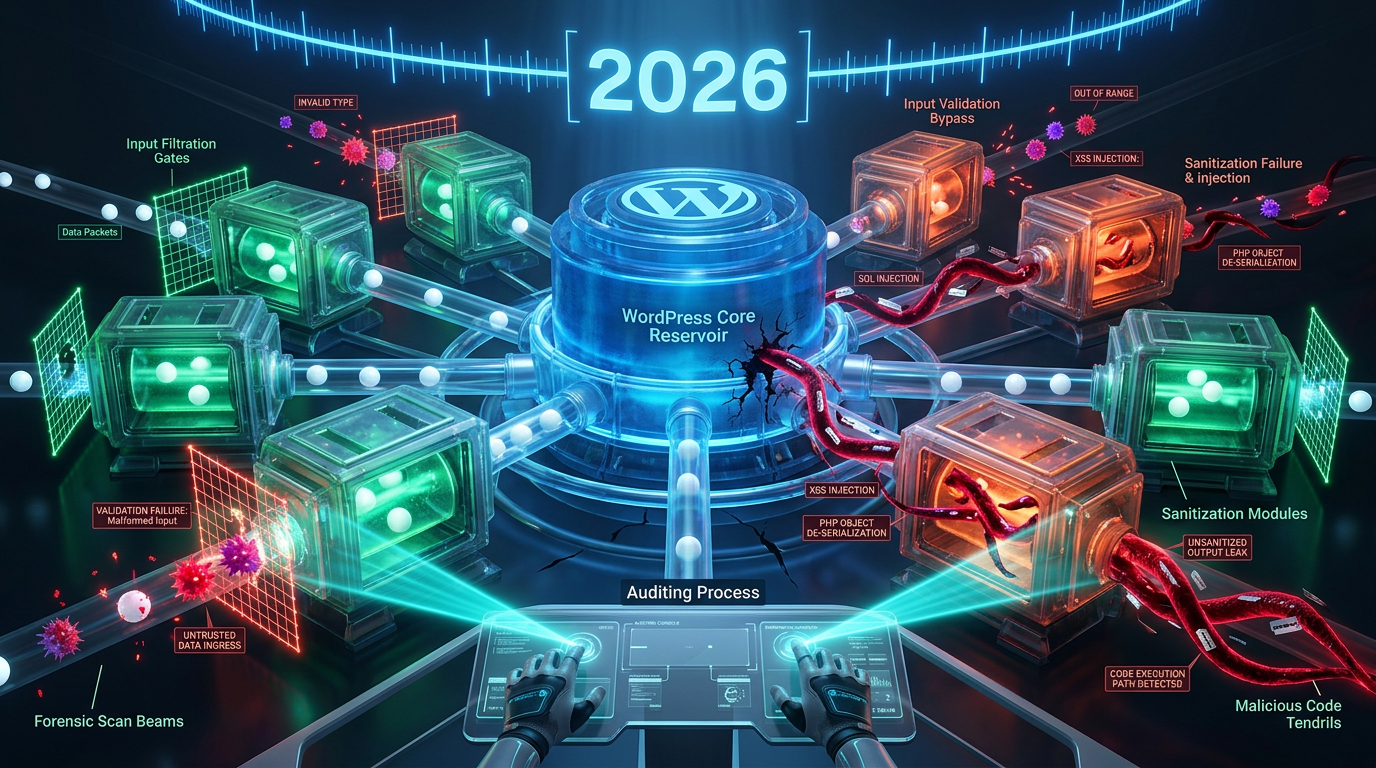
WordPress Plugin Data Flow: The Silent Conductors of Your Site
In the intricate ecosystem of WordPress, plugins act as the silent conductors, orchestrating the WordPress plugin data flow that powers everything from e-commerce transactions to content delivery. As we navigate 2026, understanding how these extensions manage and move data is not just beneficial, but critical for maintaining secure, high-performing, and seamlessly integrated websites. This article delves deep into the mechanisms by which WordPress plugins influence data architecture, examining their functionalities, potential risks, and best practices for optimizing their role in managing your site's data flow.
Understanding WordPress Plugin Data Flow Fundamentals
At its core, WordPress plugin data flow refers to the journey information takes within your WordPress site, often facilitated or initiated by plugins. This includes data input, processing, storage, retrieval, and transmission to internal or external systems. Each plugin, depending on its purpose, interacts with the WordPress core, its database, and sometimes external APIs, creating a complex web of data interactions. Understanding this data flow is crucial for site health.
The flow isn't always straightforward. It can involve various stages, from user input on a contact form (handled by a form plugin) to the processing of an order (managed by an e-commerce plugin) and the subsequent transmission of that order data to a CRM system (via an integration plugin). This complex WordPress plugin data flow requires careful management.
Internal Data Handling by Plugins
- Database Interactions: Many plugins create their own database tables or add columns to existing WordPress tables (e.g.,
wp_posts,wp_options) to store their specific data. This direct interaction is a primary component of WordPress plugin data flow. - Meta Data Storage: Plugins frequently utilize WordPress's meta data system (post meta, user meta, term meta) to attach additional information to core entities without altering the main tables directly.
- Option API: For smaller configuration settings or temporary data, plugins often leverage the WordPress Options API, storing values in the
wp_optionstable.
External Data Interactions and Integrations
Beyond internal operations, plugins are pivotal in connecting WordPress with the outside world. This outward-bound WordPress plugin data flow and external APIs is increasingly important in 2026.
- API Calls: E-commerce plugins communicate with payment gateways, social media plugins interact with platform APIs, and marketing automation plugins sync user data with external services. These API calls are key data transfer points, impacting the overall WordPress plugin data flow.
- Webhooks: Some plugins send webhooks to notify external services about specific events occurring within WordPress, such as a new user registration or a product update. This enables real-time data synchronization.
- Data Export/Import: Many plugins offer functionalities to export data (e.g., user lists, order details) in various formats (CSV, XML) or import data from external sources, facilitating manual or scheduled data transfers.
Optimizing WordPress Plugin Data Flow for Performance
The way plugins handle data has a profound impact on your website's overall data architecture and performance. Inefficient WordPress plugin data flow can lead to significant slowdowns, database bloat, and even site crashes.
Consider a scenario where multiple plugins are querying the database inefficiently or performing synchronous, blocking API calls. This cumulative effect can severely degrade user experience and server load times. As websites become more complex in 2026, optimized data handling by plugins is paramount for a smooth WordPress plugin data flow.
Performance Bottlenecks Introduced by Data Flow
- Excessive Database Queries: Poorly optimized plugins can issue numerous or complex database queries on every page load, straining the database server and hindering WordPress plugin data flow.
- Large Data Sets: Plugins storing large amounts of unstructured data or failing to clean up old data can lead to bloated databases, slowing down backups and general database operations.
- Synchronous External Calls: Waiting for a response from an external API call before rendering a page can significantly increase page load times, impacting critical metrics like Core Web Vitals.
Architectural Considerations for Managing Data Flow
Effective management of WordPress plugin resource management requires careful architectural planning to ensure efficient WordPress plugin data flow.
- Database Schema Design: Well-designed plugin database tables (with appropriate indexing) are crucial for efficient data retrieval and storage.
- Caching Strategies: Implementing robust caching mechanisms (object caching, transient API) can reduce the number of direct database queries initiated by plugins.
- Asynchronous Processing: For non-critical external data transmissions (e.g., sending email notifications, syncing analytics), plugins should ideally use asynchronous methods to avoid blocking the main request thread.
Securing WordPress Plugin Data Flow
While plugins enhance functionality, they also introduce potential security risks, especially concerning WordPress plugin data flow. Data moving in and out of your site becomes a target if not properly secured. In 2026, cyber threats are more sophisticated than ever, making plugin security a top priority for maintaining a secure WordPress plugin data flow.
Common vulnerabilities stem from outdated code, insecure configurations, excessive permissions, and third-party dependencies, all of which can compromise the integrity and confidentiality of your data.
Common Data-Related Security Weaknesses
- SQL Injection: If plugin data queries aren't properly sanitized, malicious input can lead to unauthorized database access or manipulation.
- Cross-Site Scripting (XSS): Plugins displaying unsanitized user-generated content can inject malicious scripts into web pages, stealing user data or hijacking sessions.
- Insecure Direct Object References (IDOR): When plugins expose internal objects (like file paths or user IDs) without proper authorization checks, attackers can modify or access sensitive data directly.
- Data Exposure: Plugins might inadvertently expose sensitive configuration details, API keys, or user data through misconfigured logs, error messages, or insecure endpoints.
- Broken Access Control: If a plugin doesn't properly enforce permissions, unauthorized users might gain access to sensitive data or functionality they shouldn't have, compromising WordPress plugin data flow security.
Protecting Data Flow with Best Practices
To mitigate these risks, secure coding practices and vigilant management are essential for any WordPress plugin data flow.
- Input Validation and Sanitization: All data coming into the plugin, whether from users or external sources, should be rigorously validated and sanitized to prevent injection attacks.
- Output Escaping: Data displayed on the front-end or back-end should be properly escaped to prevent XSS vulnerabilities.
- Principle of Least Privilege: Plugins should only access the data and resources absolutely necessary for their functionality. Excessive permissions increase the attack surface.
- Secure API Key Handling: API keys for external services should never be hardcoded or publicly exposed. They should be stored securely and transmitted via encrypted channels.
- Data Encryption: For highly sensitive data, consider encrypting data at rest in the database and in transit using SSL/TLS.
Evaluating Plugin Functionalities and Compatibility for Data Flow
When selecting and integrating plugins, a thorough evaluation of their functionalities and potential compatibility issues is crucial. This directly influences the efficiency and reliability of your WordPress plugin interoperability and data flow. A seemingly benign plugin can disrupt the data pathways of another, leading to unexpected behavior or data corruption.
Assessing Plugin Functionalities for Data Workflow
Before installation, always ask:
- What data does this plugin create, store, and modify? Understand its database footprint and impact on WordPress plugin data flow.
- How does it interact with other plugins? Look for explicit integrations or known conflicts.
- Which external services does it connect to, and how is that data handled? Scrutinize privacy policies and data transfer mechanisms.
- Does it offer data export/import capabilities, and are they secure?
In 2026, with increasing data privacy regulations, understanding a plugin's data lifecycle is non-negotiable. For a deeper understanding of digital asset management within plugins, consider exploring resources on WordPress plugins as Digital Asset Management Systems.
Addressing Compatibility and Conflict Issues
Plugin conflicts are a common headache in WordPress, often manifest as broken WordPress plugin data flow. These can arise from:
- Conflicting JavaScript or CSS: While often visual, these can sometimes prevent data submission or display.
- Overlapping Functionality: Two plugins trying to manage the same type of data or hook into the same WordPress core processes can cause errors.
- Outdated Code: Plugins not kept up-to-date with WordPress core or PHP versions are prone to breaking.
Always test new plugins in a staging environment. Regularly review plugin updates and their changelogs for potential compatibility warnings. Tools exist in 2026 to help detect conflicts, but manual vigilance remains key. For more insights on the lifecycle of plugins, read about WordPress plugin maintenance and obsolescence.
Best Practices for Managing WordPress Plugin Data Flow in 2026
Mastering the WordPress plugin data flow is an ongoing process that requires proactive management and adherence to best practices. Ignoring this aspect can lead to significant problems down the line, affecting security, performance, and scalability.
Strategic Plugin Selection and Maintenance
- Choose Reputable Sources: Download plugins only from the official WordPress Plugin Directory or trusted commercial vendors.
- Read Reviews and Support Forums: Gauge user experiences and developer responsiveness.
- Check Update Frequency: A frequently updated plugin indicates active development and better security patching, crucial for maintaining a healthy WordPress plugin data flow.
- Regularly Review Installed Plugins: Deactivate and delete unused plugins. Each active plugin represents a potential data pathway and security risk.
Implementing Robust Security Measures
Beyond individual plugin security, overall site security enhances the integrity of your WordPress plugin data flow.
- Use a Web Application Firewall (WAF): A WAF can detect and block malicious requests targeting plugin vulnerabilities. For advanced security, explore Cloudflare's WAF solutions.
- Regular Security Audits: Periodically scan your site for vulnerabilities, including those introduced by plugins.
- Strong Authentication: Enforce strong passwords and two-factor authentication for all user roles.
- Regular Backups: Maintain a consistent backup schedule for your entire WordPress site, including the database, to recover from data breaches or corruption. Consider robust solutions like UpdraftPlus for reliable WordPress backups.
Optimizing Performance and Scalability
Efficient data flow contributes directly to a faster, more scalable website.
- Database Optimization: Regularly optimize your WordPress database, removing transients, revising overhead, and cleaning up old plugin data.
- Content Delivery Networks (CDNs): Offload static assets and potentially serve dynamically generated content through CDNs to reduce server load. Learn more about CDNs from resources like MaxCDN's CDN best practices.
- Load Testing: Periodically load test your website to identify performance bottlenecks introduced by plugins under peak traffic.
- Monitoring: Implement performance monitoring tools to track database queries, API call timings, and overall site speed, quickly identifying anomalous WordPress plugin data flow issues.
By diligently applying these best practices, you can ensure that your WordPress plugins act as efficient and secure conductors, optimizing your website's data flow and integration architecture for the demands of 2026 and beyond.
Frequently Asked Questions

Written by Aras Akıncılar
Uzun yıllara dayanan WordPress deneyimine sahip bir siber güvenlik uzmanı olarak, eklenti ekosisteminin derinlemesine analizine odaklanıyorum. Güvenlik açıkları, performans düşüşleri ve uyumluluk sorunları üzerine hazırladığım makalelerle, WordPress kullanıcılarının sitelerini daha güvenli ve verimli hale getirmelerine yardımcı olmayı hedefliyorum.